What Size Tankless Water Heater Do I Need for My Woodbury Home?
Picking the right unit comes down to two numbers, and both are easy to figure out once you know where to look.
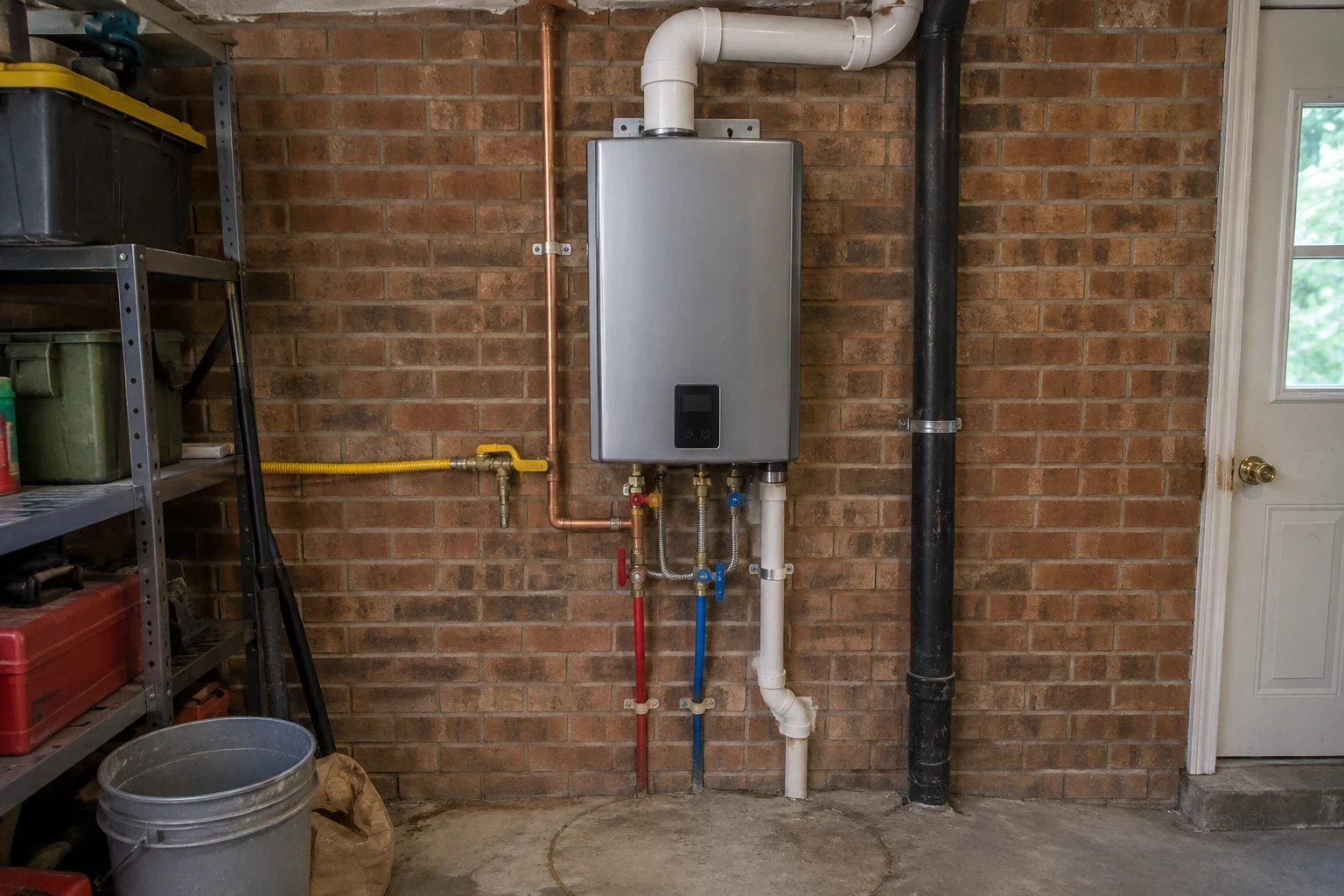
What size tankless water heater do I need?
The right size tankless water heater is the one that can heat all the hot water you use at the same time, on the coldest day of the year. For most homes that means adding up flow in gallons per minute, then checking how much the unit can raise cold winter water to about 120 degrees. Free estimate: (931) 259-4537.
Which two numbers decide the size?
Tank heaters are sized by gallons stored. Tankless units don't store anything, so they're sized by flow rate and temperature rise. Flow rate is how many gallons per minute of hot water you pull at once. Temperature rise is how many degrees the unit has to heat the water coming into your home.
Every tankless unit has a chart that shows how much flow it can handle at a given rise. A unit that runs two showers easily in July can struggle to keep up with one in January. That's why you size for both numbers together, not one or the other.
If you get the size wrong, you'll notice. Too small and the water goes lukewarm when a second tap opens. Too big and you've paid for capacity you never use, plus a larger gas line or more electrical service than you needed.
How do you add up your peak hot water use?
Think about the busiest few minutes in your home. Maybe it's a weekday morning with two showers going and someone at the kitchen sink. Maybe it's an evening with the dishwasher and washing machine running while a kid takes a bath. Add up the hot water flow for those fixtures running at the same time.
Here are rough flow numbers we use as a starting point. Your actual fixtures may run lower, especially newer low-flow showerheads, so we check what you have.
- Shower: about 1.5 to 2.5 gallons per minute, depending on the head
- Kitchen faucet: about 1.5 to 2 gallons per minute
- Bathroom faucet: about 1 gallon per minute
- Dishwasher: about 1 to 1.5 gallons per minute
- Washing machine on warm or hot: about 1.5 to 2 gallons per minute
- Garden tub filling: often 4 gallons per minute or more
Why does winter water temperature change the answer?
The water coming into your home is colder in winter than in summer. In middle Tennessee it can drop into the low 50s or lower in January and February. If you want 120-degree water at the tap, the heater has to raise that water close to 70 degrees.
The bigger the rise, the less flow a given unit can deliver. A unit rated for plenty of flow on a mild day may lose a big chunk of it in deep winter. We size for the cold months so your morning shower doesn't change with the season.
Homes on a well can see their own swings, and well water with heavy minerals can scale up a tankless unit over time. If that's your situation, we'll talk about whether pairing the heater with whole home water filtration makes sense.
Does gas or electric change the size you need?
The math for flow and rise is the same either way. What changes is what your home has to supply to run the unit.
A gas tankless unit is rated in BTUs, and the bigger ones need a lot of gas at once. Your existing gas line may be too small to feed it, and it needs proper venting to the outside. Sometimes the line or vent run decides which unit fits, not just the flow.
A whole-home electric tankless unit draws a heavy load and often needs multiple large breakers. Many older panels can't carry it without an upgrade. Electric units also tend to fall short on cold winter water in bigger homes, so they fit best in smaller homes or as a point-of-use heater under one sink.
- Gas: check line size, meter capacity and vent path
- Electric: check panel capacity and wire size
- Either: check where the unit will mount and how far it is from the main fixtures
What happens when we come out to size it?
We walk your home, count fixtures, look at your current water heater and check the gas line or electrical panel. We ask how your household actually uses hot water, because a family of five with teenagers is a different job than two people who shower at different times.
Then you get a written estimate that shows the unit we'd install and why, plus any gas line, venting or permit work it needs. The same person you talk to on that visit is the one you call with questions and the one who keeps the job on track through install and cleanup. Estimates are free, and we offer financing options if you want to spread out the cost.
More questions about tankless sizing
- Is it better to just buy the biggest unit?
- Not usually. A unit that's far too big costs more up front and may need a larger gas line or more electrical service. Some oversized units also need a higher minimum flow before they fire, which can make small draws at a bathroom sink feel slow to heat.
- Can one tankless unit handle a large house?
- Often, yes, if it's sized for your peak use and winter water. In bigger homes with a lot of bathrooms, two units linked together or a second unit near a far bathroom can work better. We'll tell you which way makes sense for your layout.
- Will I still wait for hot water at the tap?
- A tankless unit heats water fast, but the hot water still has to travel through the pipes to reach you. If you wait a long time now, you'll wait about the same with tankless unless the unit sits closer to that fixture.
- Do I need a permit to switch to tankless?
- Water heater work that involves gas lines, venting or new electrical service often needs a permit and inspection. We check what applies to your home and handle the permit as part of the job.
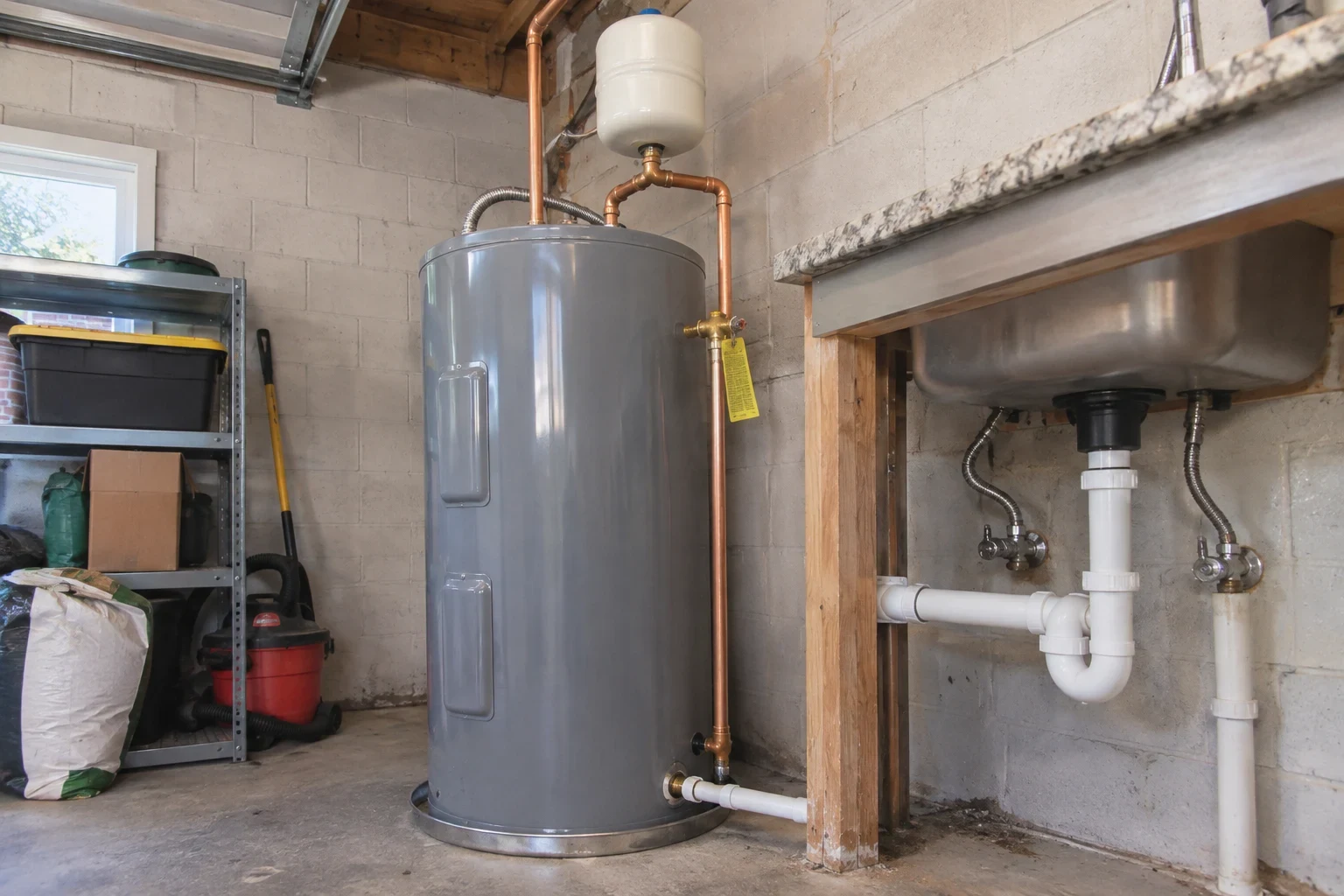
Get the size right the first time
We'll look at your fixtures, your gas or electric service and how your household uses hot water, then explain which unit fits and why. One person handles your questions from the estimate to cleanup.